

The book of Acts could almost be read as two volumes: the Acts of Peter and the Acts of Paul. The first twelve chapters are filled with the ministry of Peter. From Pentecost to Cornelius’ household, Peter dominates the story. From chapter thirteen onward, however, Paul steps into the foreground, carrying the gospel far beyond Jerusalem into the Gentile world.
But why are these stories preserved for us? Paul answers in Romans 15:4:
Romans 15 (KJV)
4 For whatsoever things were written aforetime were written for our learning, that we through patience and comfort of the Scriptures might have hope.”
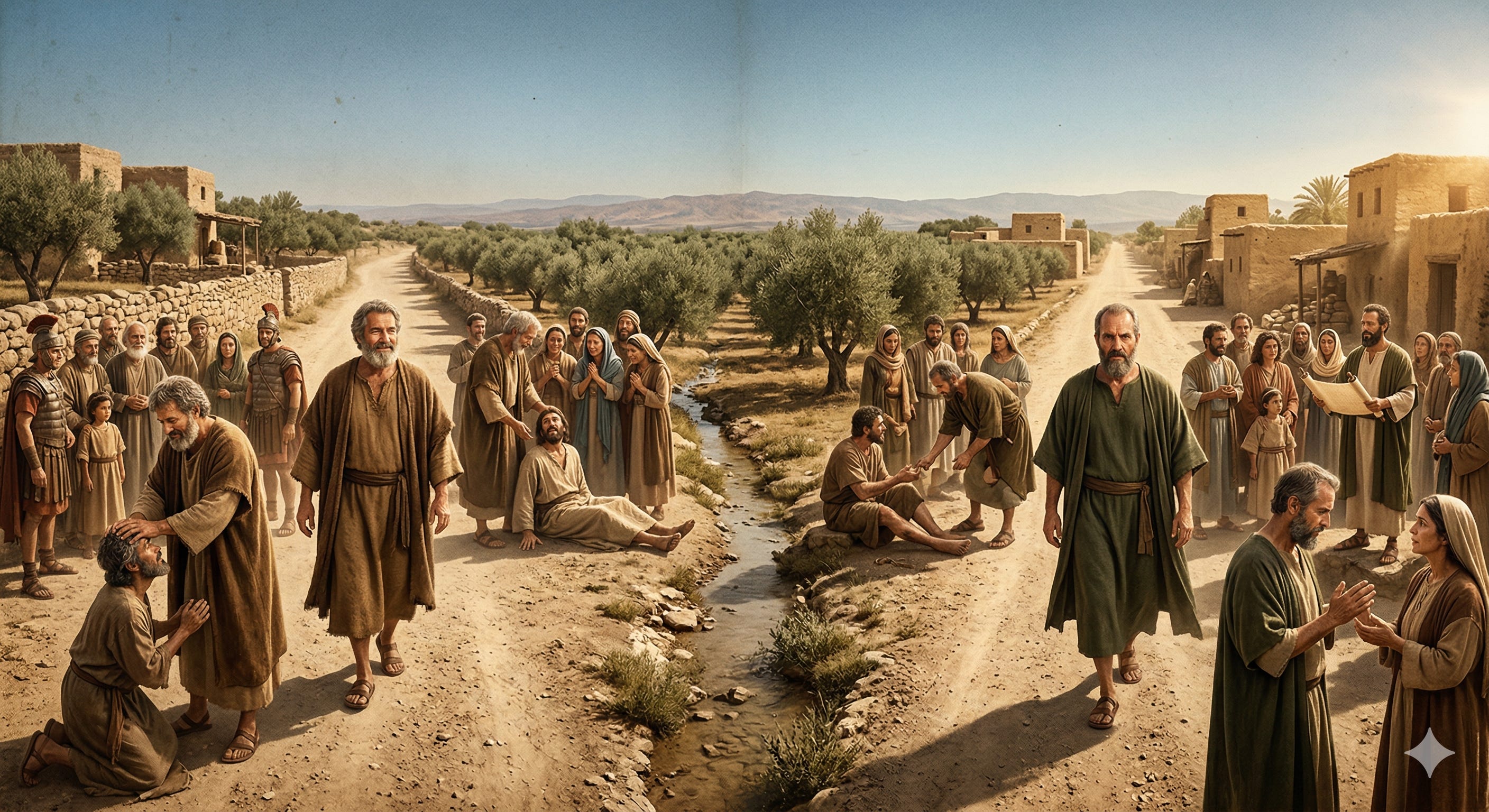
The Spirit inspired Luke to record these parallels between Peter and Paul not for curiosity’s sake, but for our instruction.
The Mirrored Ministries of Peter and Paul
Luke seems deliberate in setting the two apostles side by side, almost as if to say: whatever Peter did, Paul also did. Their ministries run in parallel, and the pattern is impossible to miss:
Healing the lame:
Peter and John healed the lame man at the Beautiful Gate (Acts 3:1–10).
Paul healed the lame man at Lystra (Acts 14:8–10).
Healing the sick:
Peter healed Aeneas, bedridden for eight years (Acts 9:32–34).
Paul healed Publius’ father of fever and dysentery (Acts 28:7–8).
Miraculous overflow:
Peter’s shadow healed the sick (Acts 5:15).
Paul’s handkerchiefs and aprons healed and drove out demons (Acts 19:11–12).
Raising the dead:
Peter raised Dorcas/Tabitha (Acts 9:36–41).
Paul raised Eutychus (Acts 20:9–12).
Confronting sorcery:
Peter rebuked Simon the sorcerer (Acts 8:18–23).
Paul rebuked Elymas the sorcerer (Acts 13:8–11).
Deliverance from prison:
Peter was freed by an angel (Acts 12:6–11).
Paul and Silas were freed by an earthquake (Acts 16:25–26).
Pronouncing judgment:
Peter declared judgment on Ananias and Sapphira (Acts 5:1–11).
Paul declared temporary blindness on Elymas (Acts 13:8–11).
Laying on of hands / Spirit received:
Peter and John laid hands on the Samaritans, who received the Spirit and spoke in tongues (Acts 8:14–17).
Paul laid hands on the Ephesian disciples, who received the Spirit and spoke in tongues (Acts 19:1–7).
Leading Gentiles to Christ:
Peter led Cornelius and his household to Christ (Acts 10).
Paul led the Philippian jailor and his household to Christ (Acts 16:25–34).
Preaching powerfully:
Peter’s sermon at Pentecost brought 3,000 to Christ (Acts 2:14–41).
Paul’s sermon at Pisidian Antioch brought multitudes of Jews and Gentiles to faith (Acts 13:44–48).
Confronting Jewish authority:
Peter declared to the Sanhedrin, “We must obey God rather than men” (Acts 5:29).
Paul declared to the council, “It is with respect to the hope of the resurrection of the dead that I am on trial” (Acts 23:6).
Visions and divine guidance:
Peter’s vision of clean and unclean animals opened the gospel to Gentiles (Acts 10:9–16).
Paul’s vision of the Macedonian man opened the gospel to Europe (Acts 16:9–10).
Dramatic calling:
Peter was called from fishing to follow Jesus (Luke 5:1–11).
Paul was called on the road to Damascus (Acts 9:1–6).
Confronting wrongdoing:
Peter rebuked Simon Magus (Acts 8:20–23).
Paul rebuked Peter himself at Antioch (Galatians 2:11–14).
Trials before rulers:
Peter was arrested, tried, and beaten by Jewish leaders (Acts 4–5).
Paul was arrested, tried before governors and kings, and sent to Caesar (Acts 21–26).
Martyrdom tradition:
Peter was crucified in Rome.
Paul was beheaded in Rome.
The symmetry is so precise that a reader might conclude Luke’s motive was to elevate Paul to Peter’s level. But Paul does not leave that conclusion ambiguous — he declares it himself:
Galatians 2 (KJV)
8 For he that wrought effectually in Peter to the apostleship of the circumcision, the same was mighty in me toward the Gentiles.
From Rivalry to Recognition
Think about the timeline. While Peter was standing before the Sanhedrin, boldly saying, “We ought to obey God rather than men” (Acts 5:29), Paul was still breathing threats and dragging Christians to prison (Acts 8:3). While Peter rejoiced that he was counted worthy to suffer shame for the name of Jesus, Paul was the church’s fiercest persecutor.
Yet God transformed Paul, raised him up as a preacher, and gave him a ministry that paralleled Peter’s step for step. Sometimes it even seemed to overshadow it. That could have been difficult for Peter to accept. Add to this the fact that Paul, in Galatians 2, recounts rebuking Peter to his face for hypocrisy.
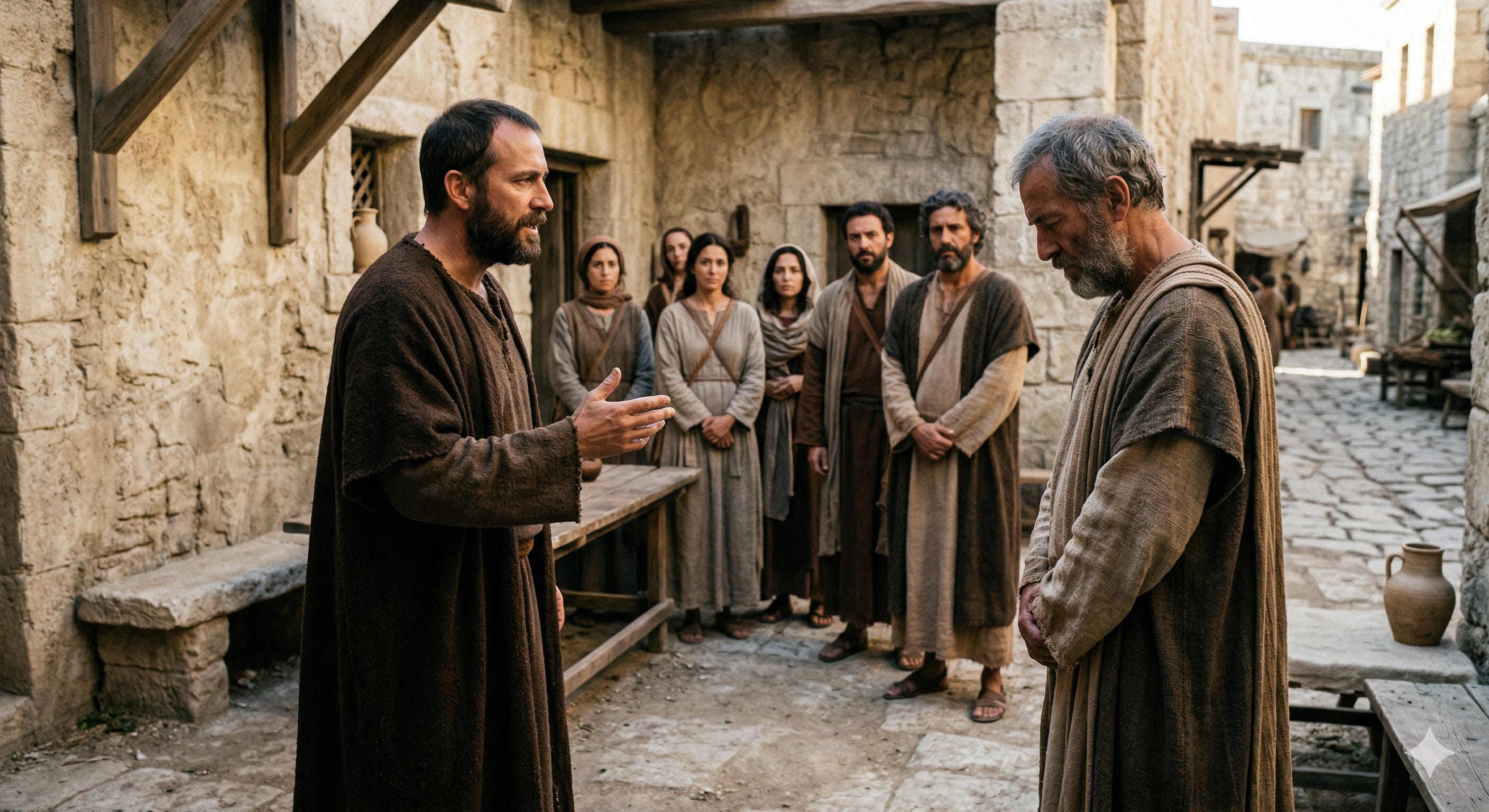
Most men in Peter’s shoes would have bristled. Most leaders would have grown defensive. But Peter chose a higher road. He looked at Paul — the latecomer, the former persecutor, the sharp critic — and still called him “our beloved brother Paul.” More than that, Peter placed Paul’s writings on par with Scripture itself (2 Peter 3:15–16).
Lessons for Leaders
Celebrate grace in others. If God raises another voice alongside ours, let us rejoice rather than compete.
Respect even when corrected. Paul rebuked Peter, but Peter still honoured Paul. True greatness is not defensive.
See beyond the past. Peter could have judged Paul by his history as a persecutor. Instead, he saw God’s grace at work in his present.
True greatness is humble. Peter’s humility in affirming Paul may have been his greatest act of leadership.
Conclusion
The story of Peter and Paul is not just about two apostles. It is about grace, humility, and the Spirit’s power to unite different men in one mission. One was an early follower, the other a latecomer. One preached to Jews, the other to Gentiles. One walked with Jesus in Galilee, the other met Him on the road to Damascus. Their ministries often ran in tension.
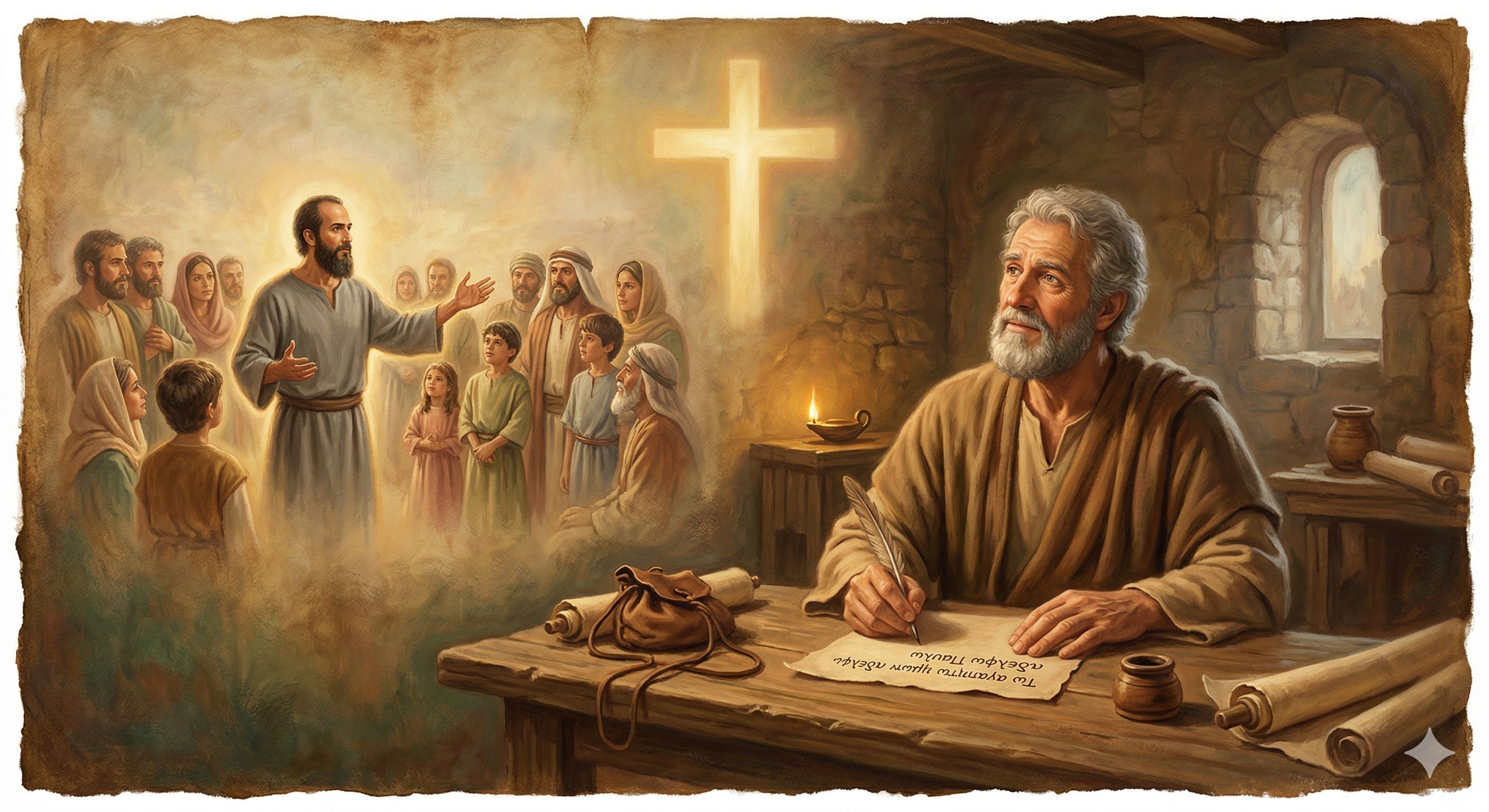
But in the end, Peter looked at Paul and said, “our beloved brother… his letters… as the other Scriptures.”
And that is why their story is preserved for us. As Paul writes elsewhere:
1 Corinthians 10 (KJV)
11 Now all these things happened unto them for examples: and they are written for our admonition, upon whom the ends of the world are come.
Leaders, take note. Rivalry has no place in the kingdom. The way of Christlike leadership is humility — the kind Peter showed when he honoured Paul.
Continue in grace!