

Acts 7 (KJV)
22 And Moses was learned in all the wisdom of the Egyptians, and was mighty in words and in deeds.
There is a painful irony in the story of Moses.
The man God would use to deliver Israel was first rejected by the very people he came to help.
Stephen tells us that Moses “supposed his brethren would have understood how that God by his hand would deliver them: but they understood not” (Acts 7:25). Moses thought the matter was clear. He assumed that his action against the Egyptian would be recognised for what it was, a sign that God had raised him to challenge oppression.
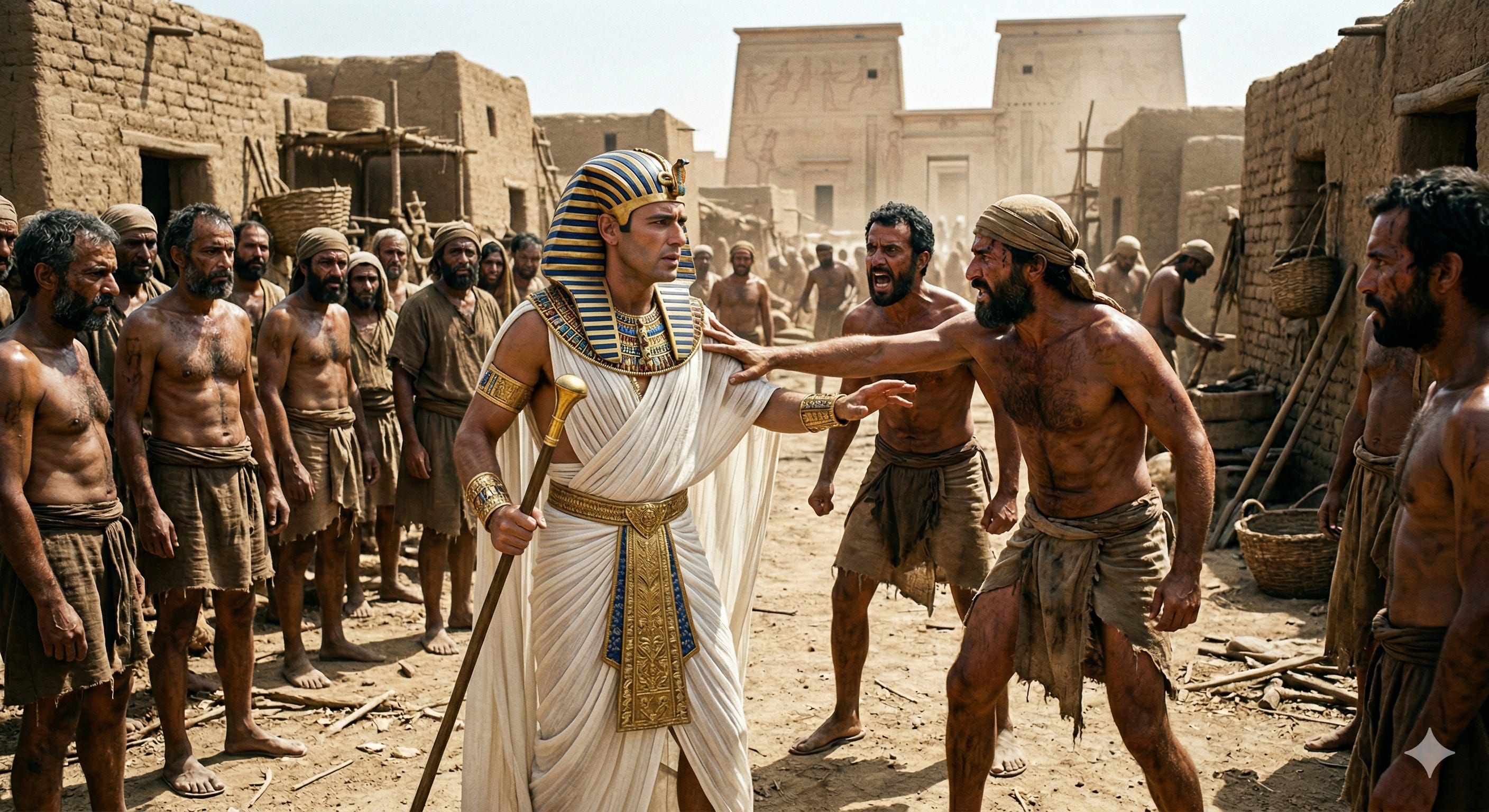
But Israel did not see a deliverer.
They saw a problem.
They saw a man who did not quite look like them, did not sound like them, and did not seem to come from where they came from. When Moses tried to intervene in a quarrel between two Hebrews, one of them thrust him away and said:
Acts 7
27 Who made thee a ruler and a judge over us?
That question still lives with us.
Many people still reject the leaders they need because those leaders feel too different, too unfamiliar, too unusual, or too far removed from their own experience.
Moses Looked Too Egyptian
Moses was a Hebrew by birth, but he was raised in Pharaoh’s house. He had access to education, training, power, and culture that the average Israelite slave did not. Acts 7:22 says he was “learned in all the wisdom of the Egyptians, and was mighty in words and in deeds.”
That was an advantage.
But it was also a problem.
To the Israelites, Moses may have looked more Egyptian than Hebrew. He may have spoken differently. He may have carried himself differently. He may have seemed too polished, too exposed, too connected to the palace, too unlike the people in their miserable bondage.
That is often how leadership works.
The very things that prepare a person to lead can also make him look strange to the people he is called to lead.
A man who has seen beyond the limits of the group will often sound different from the group. A leader who has learnt what the people have not learnt will not speak like one who is still trapped by the same assumptions. A person who has access to rooms others have never entered may return with a bearing that feels foreign.
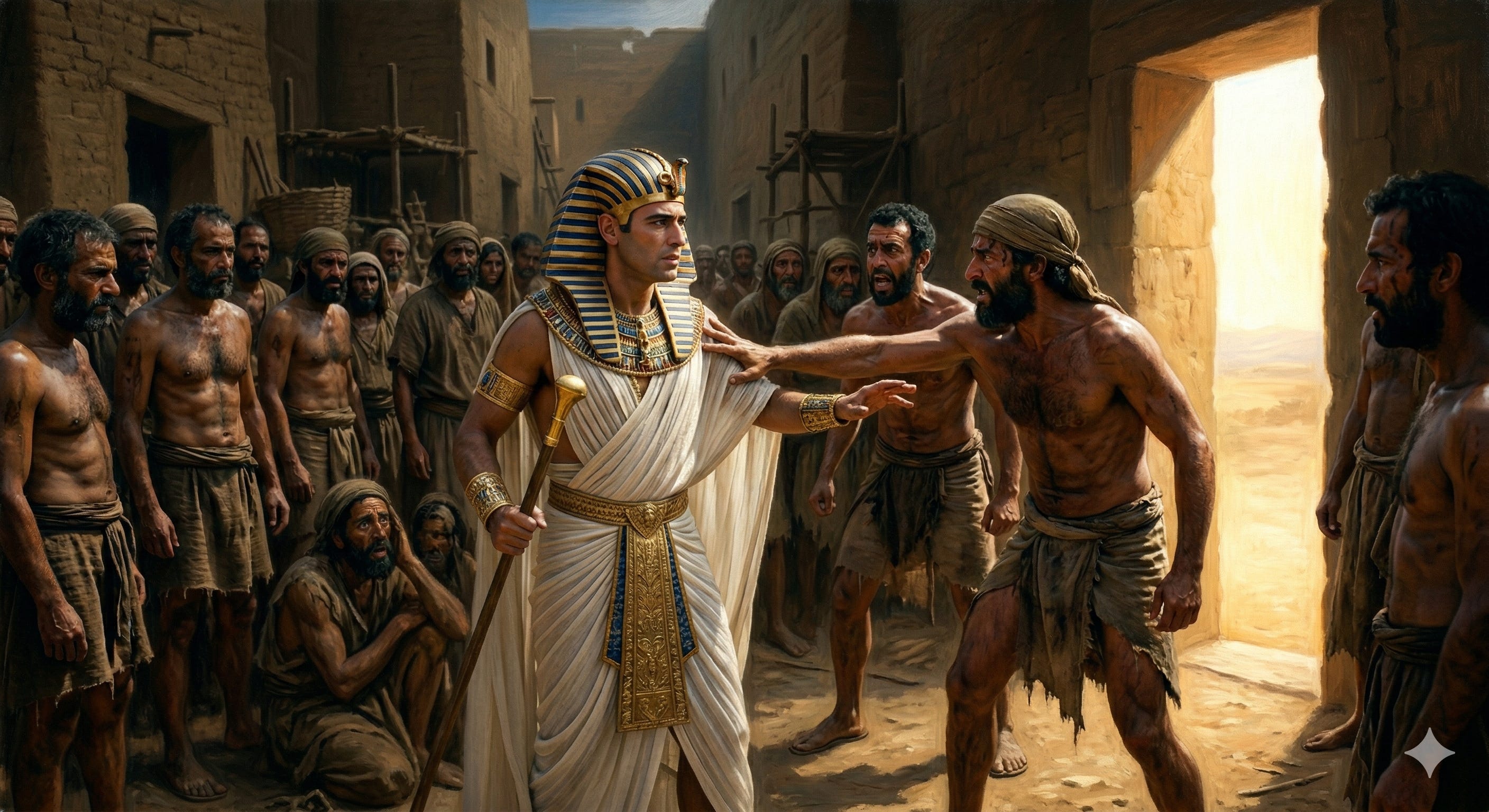
And people are often suspicious of what feels foreign.
Many do not mind oppression as much as they mind unfamiliarity. They can tolerate bondage they understand. They struggle with deliverance when it arrives in a form they do not recognise.
Bondage Damages Discernment
Israel’s problem was not only that they were oppressed by Egypt. Their problem was also that years of oppression had done something to them inside.
Bondage does not only afflict the back. It also affects the mind.
When people have lived too long under pressure, too long under fear, too long under humiliation, their judgement can become warped. They may begin to resent strength. They may distrust boldness. They may be uncomfortable with difference. They may even attack the very person sent to help them, simply because he does not fit the emotional shape of their pain.
This is what makes oppression so destructive. It does not only produce suffering. It also trains people to normalise suffering. It conditions them to distrust disruptive change.
So, when Moses acted, they did not all think, “Here is our deliverer.”
At least one man thought, “Here is a threat.”
That is why leadership is so often resisted, not because it is wrong, but because it disturbs the system people have learnt to survive in.
Leadership is Not Mere Resemblance
One of the great mistakes people make is to think that the best leader is simply the one most like them.
He talks like us.
He thinks like us.
He reacts like us.
He shares all our instincts.
He confirms all our assumptions.
He never makes us uncomfortable.
But if your leader only mirrors you, how will he lead you beyond where you are?
If a people are fearful, they need courage, not a larger version of their fear.
If a people are confused, they need clarity, not a more eloquent form of confusion.
If a people are compromised, they need conviction, not companionship in compromise.
Leadership is not given to a man so he can reflect the weakness of the people. Leadership is given to a man so he can confront it, challenge it, and lead the people out of it.
This is one reason leaders often seem “other”.
Joseph did not think like his brothers.
David did not think like Saul.
Elijah did not think like Ahab’s court.
Paul did not think like the Judaizers.
Jesus did not think like the religious establishment of His day.
Real leaders often carry something the people do not yet value. That is why they are resisted before they are recognised.
But difference alone is not enough
There is another side to this story.
Moses was called, but he moved before the people understood him. Acts 7:25 says, “he supposed his brethren would have understood.” That was his mistake.
He was right about the call, but wrong about their perception.
A leader may know he is sent by God and still misread the readiness of the people. Calling alone does not remove the need for timing. Divine assignment does not cancel process. It is possible to have a right burden and a wrong moment.
This is where many leaders fail.
They are right in principle, but weak in connection.
They have truth, but no trust.
They have authority, but no relationship.
They have vision, but no bridge into the hearts of the people.
That is why this quote is so important: “Rules without a relationship often lead to rebellion.”
People do not gladly submit to correction from someone who feels distant, cold, or inaccessible. They may obey for a while. They may comply outwardly. But resentment grows in the dark.
John Maxwell put it this way: “Leaders touch a heart before they ask for a hand.” He called it the Law of Connection.
That does not mean leaders must flatter people. It does not mean they must avoid starting with hard truths. It means leadership is not only about being right. It is also about gaining the moral and relational ground from which your leadership can be received.
Moses had zeal. Later, he would also have weight, process, and proof.
Why People Resent “Otherness” in Leaders Today
This issue shows up everywhere.
A church may reject the pastor who insists on doctrine because people prefer charisma.
An organisation may resist the leader who demands structure because disorder has become normal.
A family may ignore the person telling the truth because he sounds too firm.
A nation may despise the reformer because he threatens networks of convenience.
A ministry may prefer a familiar insider, even when that insider has no capacity to lead it forward.
People often resent being led by someone they see as “other” because “other” feels unsafe.
He did not come up through our route.
She does not talk like us.
He is not part of our clique.
She has seen things we have not seen.
He asks questions we do not like.
She challenges habits we have excused.
But this is exactly the point.
The leader may be “other” because the future is “other”.
If God wants to take a people somewhere new, He may raise a leader who is not fully shaped by the limitations of the old environment.
The question we should ask is not, Is he exactly like us?
The question is, Has God given him what we lack?
A Final Warning
Of course, this truth can be abused. Not every unusual person is a leader. Not every outsider is a deliverer. Difference alone is not qualification.
Moses was not called because he was different. He was rejected in part because he was different. The difference was not the source of his authority. God was.
That matters.
We are not to follow men because they are exotic, educated, impressive, or different. We are to follow men whom God has shaped, sent, and equipped. But when such a man appears, his difference should not automatically count against him.
Sometimes the very quality that makes you suspicious of a leader is the quality that makes him useful.
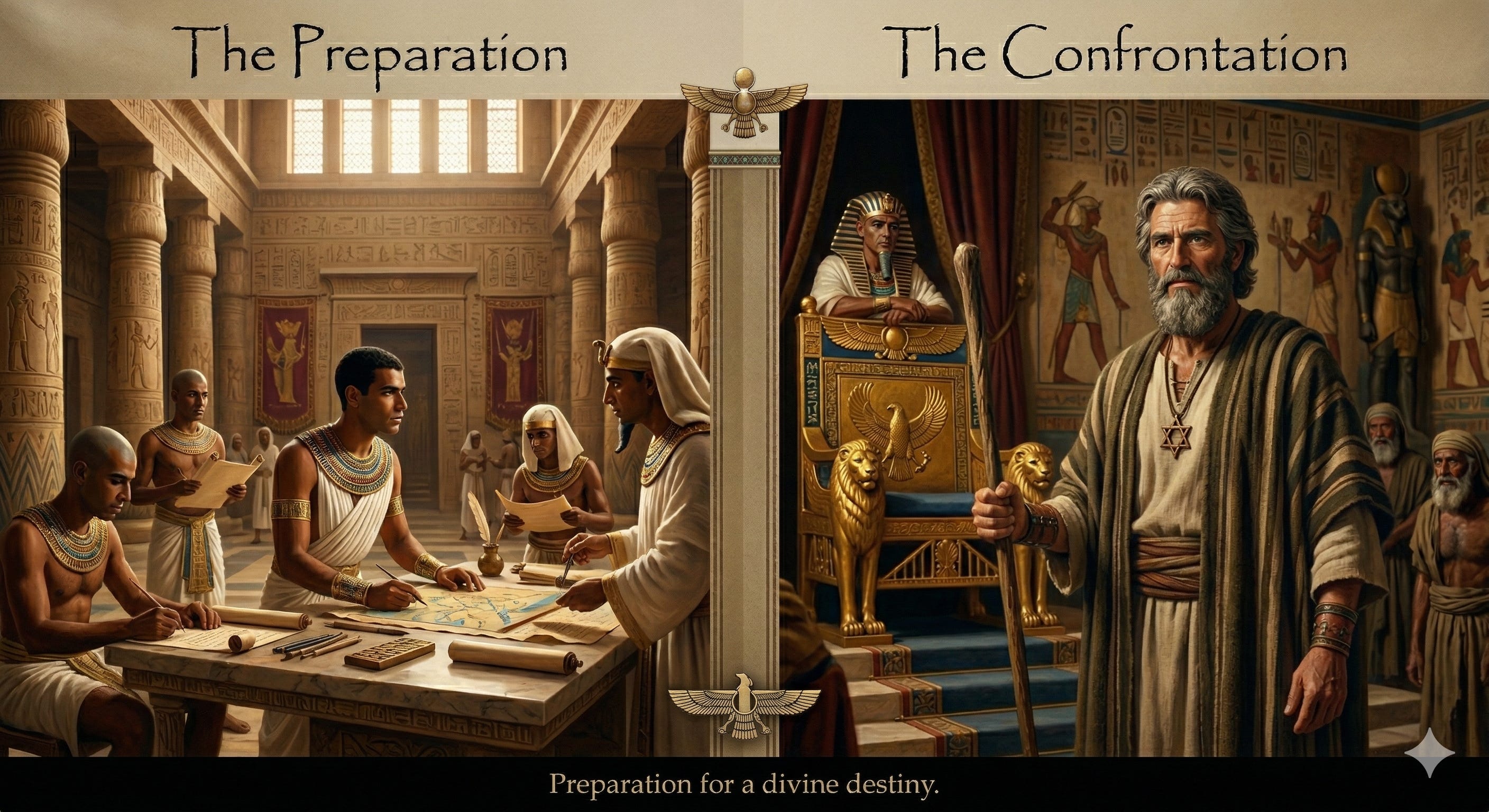
Moses had seen Egypt from the inside. Israel had only seen it from below. That difference mattered.
The man who had learnt in Pharaoh’s court would one day confront Pharaoh’s throne.
So perhaps we should be slower to ask, “Who made thee a ruler and a judge over us?” and quicker to ask whether God is sending help in a form our pride, pain, or prejudice does not easily welcome.
People sometimes reject the leaders they need because those leaders do not feel familiar enough, close enough, or safe enough.
But a leader is not sent to preserve a people in their weakness.
He is sent to lead them out of it.
Continue in grace!
